Plantains look similar to bananas, but they are vegetables instead of fruits and should be cooked to eat them. Manny Alvarez says in his book, "The Hot Latin Diet: The Fast-Track to a Bombshell Body," that plantains are nutritious and offer several health benefits in addition to their delicious flavor. Add plantains to stews or soups in place of potatoes to get the advantages they offer.
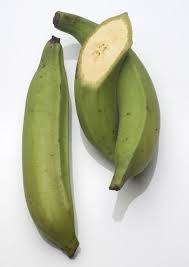 One plantain supplies several grams of fiber to your diet, Victor Preedy, Ronald Watson and Vinood Patel say in their book, "Flour and Breads and Their Fortification in Health and Disease Prevention." Fiber is an important nutrient because it helps decrease your chances of suffering from heart disease, diabetes and certain cancers, such as colon cancer. Fiber also helps prevent constipation by keeping your intestinal tract working the way it should.
Beta-carotene
Plantains are also a source of beta-carotene, which the Mayo Clinic says you need to produce sufficient amounts of vitamin A. Vitamin A is essential for eye health as well as normal growth. A diet lacking in vitamin A can result in difficulty seeing in the dark, dry eyes, eye infection and unhealthy skin. Adding cooked plantains to your diet is one way to increase your intake of this important vitamin.
Calcium
Your bones, teeth, nails and muscles rely on an adequate intake of calcium to maintain their health and their strength. Alvarez says that plantains supply a good amount of calcium. Calcium contributes to strong bones, which helps prevent breaks and fractures as well as diseases, such as osteoporosis, as you age. Calcium also aids in keeping your teeth healthy so you are less likely to experience cavities, periodontal disease and teeth that fall out easily. Including plantains in your diet can help you consume more calcium.
Vitamin C
Plantains are also a source of vitamin C. Preedy, Watson and Patel say that one plantain supplies you with 20mg of vitamin C in each 3.5 oz. serving. This translates to between 40mg and 60mg of vitamin C, depending on the size of your plantain. Consuming enough vitamin C helps your body fight off infections that can lead to sickness and also promotes healthy gums, teeth and skin. Getting plenty of vitamin C also helps your body absorb the iron you consume from your food so you are able to produce red blood cells and provide oxygen throughout your body.
Read more: http://www.livestrong.com/article/373890-what-are-the-health-benefits-of-a-plantain/#ixzz2JAsiEK25
Thousands of research studies over the past decade have heralded the critical importance of eating a diet filled with flavonoids from a variety of brightly colored vegetables and fruits to help prevent and even treat many chronic illnesses. Most plants and fruits rely on flavonoid compounds for protection against the environment and to propagate and flourish. These same properties support human health by altering genetic expression and specifically targeting essential metabolic processes to ward off diseases such as cancer, dementia and the most prevalent killer of men and women, cardiovascular disease.

Researchers from the Harvard School of Public Health developed a study to analyze a specific sub-class of flavonoids, called anthocyanins, that has been shown to help dilate arteries, counter the buildup of plaque and provide other cardiovascular benefits. Publishing in the journal Circulation, the scientists found that women who ate at least three servings of blueberries and strawberries per week had significantly fewer heart attacks. Blueberries and strawberries contain high levels of anthocyanins that have shown cardiovascular benefits in past research studies.
Lead study author, Dr. Eric Rimm noted "Blueberries and strawberries can easily be incorporated into what women eat every week... this simple dietary change could have a significant impact on prevention efforts." The researchers developed a cohort of 93,600 women nurses, aged between 25 and 42 who completed dietary questionnaires every four years for a period of 18 years.
Over the course of the study review period, 405 women experienced a heart attack. The study team found that women who consumed the most blueberries and strawberries had a 32 percent reduction in their risk of heart attack as compared to women who ate the berries once a month or less. Interestingly, the results did not change in women who otherwise ate a diet rich in other fruits and vegetables, providing solid proof that the flavonoids provided by the berries were responsible for the heart attack risk reduction benefits.
The study authors concluded "We have shown that even at an early age, eating more of these fruits may reduce risk of a heart attack later in life." The study results were independent of other risk factors, such as age, high blood pressure, family history of heart attack, body mass, exercise, smoking, caffeine or alcohol intake. While this study was conducted using a large sampling of women, eating between three and five servings of fresh berries each week can dramatically lower heart attack risk for men and women alike.
Learn more: http://www.naturalnews.com/038735_flavonoids_heart_attack_risk_women.html#ixzz2IKK66wPC
